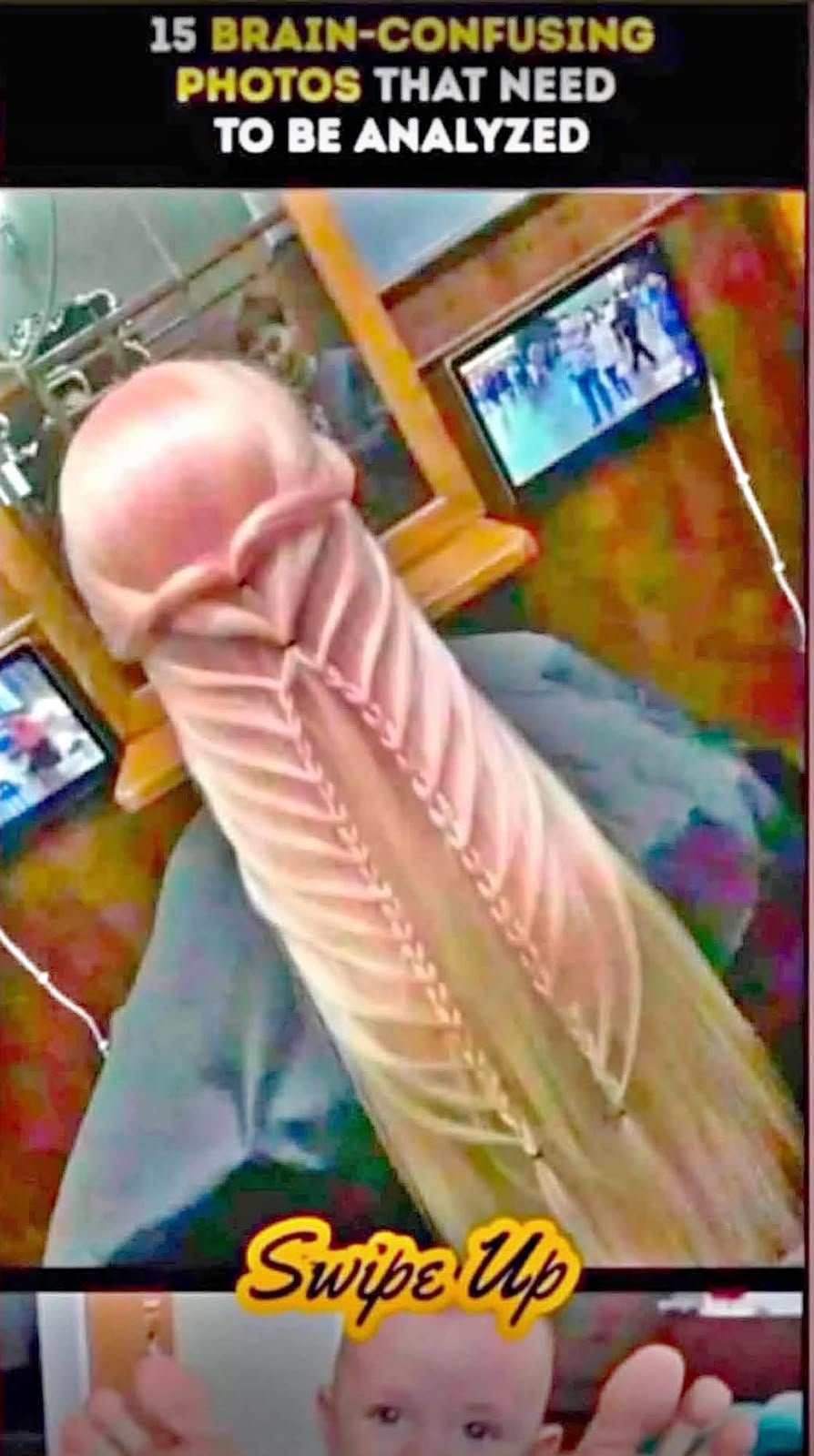
The image above belongs to a fascinating category known as brain-confusing or perception-challenging photographs. At first glance, it may appear unfamiliar, abstract, or even puzzling. Viewers often struggle to immediately identify what they are seeing. This confusion is not a flaw in intelligence or attention—it is a natural consequence of how human perception works.
This article explores why images like this cause confusion, how symmetry and perspective influence interpretation, and why such visuals continue to captivate audiences across social media and psychology studies alike.
One of the strongest elements present in this image is symmetry. Symmetry occurs when one part of an image mirrors another, creating balance and repetition. While symmetry is often associated with beauty and order, it can also confuse the brain when applied in unexpected ways.
Human perception relies heavily on familiar patterns—faces, bodies, landscapes, and everyday objects. When symmetry disrupts these patterns, the brain may attempt to “fill in the blanks” incorrectly. Instead of recognizing the original subject, the viewer may see something entirely different.
In symmetrical images:
- Depth can appear flattened
- Orientation becomes ambiguous
- Familiar shapes merge into unfamiliar forms
This phenomenon explains why some viewers report seeing multiple interpretations of the same image depending on how long they look at it.
Why the Brain Searches for Meaning
The brain is wired for interpretation, not passive observation. From an evolutionary perspective, quickly identifying faces, movement, or potential threats helped humans survive. As a result, the brain constantly searches for meaning—even when none is clearly defined.
In ambiguous images:
- The brain guesses instead of confirms
- Context is invented when missing
- Perspective errors occur
This image offers minimal environmental cues. There is no background scenery, no clear orientation markers, and no familiar reference point. Without these anchors, the brain struggles to assign a single, stable interpretation.
The Role of Cropping and Framing
Another reason this photo challenges perception is tight framing. When an image is cropped closely, it removes contextual information that helps the brain understand scale, position, and orientation.
For example:
- Is the image upright or rotated?
- Is the subject close or far away?
- What part of a larger scene is being shown?
Without answers to these questions, perception becomes guesswork. The brain may reinterpret textures as shapes or shadows as outlines, creating illusions that were never intended by the original scene.
Mirror Effects and Visual Duplication
Mirror effects are commonly used in digital media to create surreal or eye-catching visuals. By duplicating and flipping part of an image, designers can produce scenes that look simultaneously realistic and impossible.
Mirror effects can:
- Create false depth
- Merge separate elements into one
- Trick the brain into seeing new forms
In this case, the mirrored composition causes the central area to appear unfamiliar. The repetition draws attention to the middle, encouraging the brain to search for meaning there—even if none exists beyond abstract form.
Why These Images Go Viral Online
Images like this often circulate widely on social media under titles such as “brain-confusing photos” or “images you have to look at twice.” Their popularity is no accident.
They succeed because they:
- Trigger curiosity
- Encourage prolonged viewing
- Invite discussion and interpretation
People enjoy sharing content that makes others pause and think. The moment of confusion followed by realization—or continued uncertainty—creates engagement, comments, and debate.
The Psychology of Ambiguous Images
Psychologists have long studied ambiguous images to understand perception. Famous examples include optical illusions that can be seen in two ways or images that shift interpretation over time.
Ambiguous visuals reveal that:
- Perception is subjective
- Context shapes interpretation
- Different viewers see different things
This image functions in a similar way. Some viewers may perceive abstract shapes, others may see mirrored forms, and some may struggle to categorize it at all. None of these responses are incorrect—they simply reflect individual perception.
Attention, Focus, and Viewing Time
The longer a viewer looks at an ambiguous image, the more interpretations may emerge. Short glances often result in confusion, while extended viewing can lead to partial understanding—or even more uncertainty.
Factors that influence perception include:
- Screen size
- Viewing angle
- Lighting conditions
- Viewer expectations
This is why such images are often paired with prompts like “Look again” or “Swipe up.” They invite interaction and deeper attention.
Digital Editing and Modern Illusions
With modern editing tools, creators can easily manipulate images to challenge perception. Cropping, mirroring, contrast adjustments, and color balancing all influence how an image is read.
Importantly, not all confusing images are digitally altered. Many are natural photographs taken from unusual angles or under uncommon conditions. The brain assumes typical viewpoints, so when those assumptions are broken, confusion follows.
Why the Brain Dislikes Uncertainty
Humans naturally seek clarity. When an image resists easy interpretation, it creates mild cognitive tension. The brain wants resolution—an “aha” moment where everything clicks.
This tension explains why viewers:
- Zoom in
- Rotate screens
- Ask others what they see
The discomfort of not knowing becomes a motivating force, encouraging deeper engagement.
The Educational Value of Visual Illusions
Beyond entertainment, images like this serve an educational purpose. They help demonstrate how perception works and how easily it can be influenced.
In educational settings, such images are used to teach:
- Cognitive bias
- Visual processing
- Human perception limits
They remind us that seeing is not the same as understanding.
Art, Interpretation, and Subjectivity
From an artistic perspective, ambiguous images challenge traditional ideas of representation. Instead of delivering a clear message, they invite interpretation.
Art does not always aim to explain—it often aims to provoke thought. In this sense, images like this succeed by encouraging viewers to question their assumptions.
Why There Is No “Wrong” Interpretation
One of the most important lessons from perception-challenging images is that there is no single correct way to see them. Each viewer brings their own experiences, expectations, and visual habits to the image.
Images that confuse the brain are powerful reminders that perception is not objective. What we see is shaped by biology, experience, and context. When those elements are disrupted, the brain struggles—and in that struggle, we learn more about ourselves.
This image is not meant to deceive or shock. Instead, it invites curiosity, patience, and reflection. It shows that sometimes, the most interesting visuals are not the ones we understand immediately, but the ones that make us stop, look again, and question what we think we know.
In a world flooded with instantly recognizable content, images that resist quick interpretation offer something rare: a moment of thoughtful pause.